When facing significant tooth loss, choosing the right replacement solution can feel overwhelming. You want something that looks natural, functions reliably, and provides long-term value. Dental implants dentures, also known as implant-supported dentures or overdentures, combine the comprehensive coverage of dentures with the stability and bone-preserving benefits of dental implants, creating a solution that addresses the limitations of both traditional dentures and individual implant crowns.
This hybrid approach to tooth replacement has transformed the lives of countless patients who struggled with loose dentures or who needed to replace multiple teeth but found the prospect of individual implants for each tooth impractical. Understanding how dental implants dentures work and who benefits most from them helps you determine whether this innovative solution is right for your needs.
Understanding Dental Implants Dentures
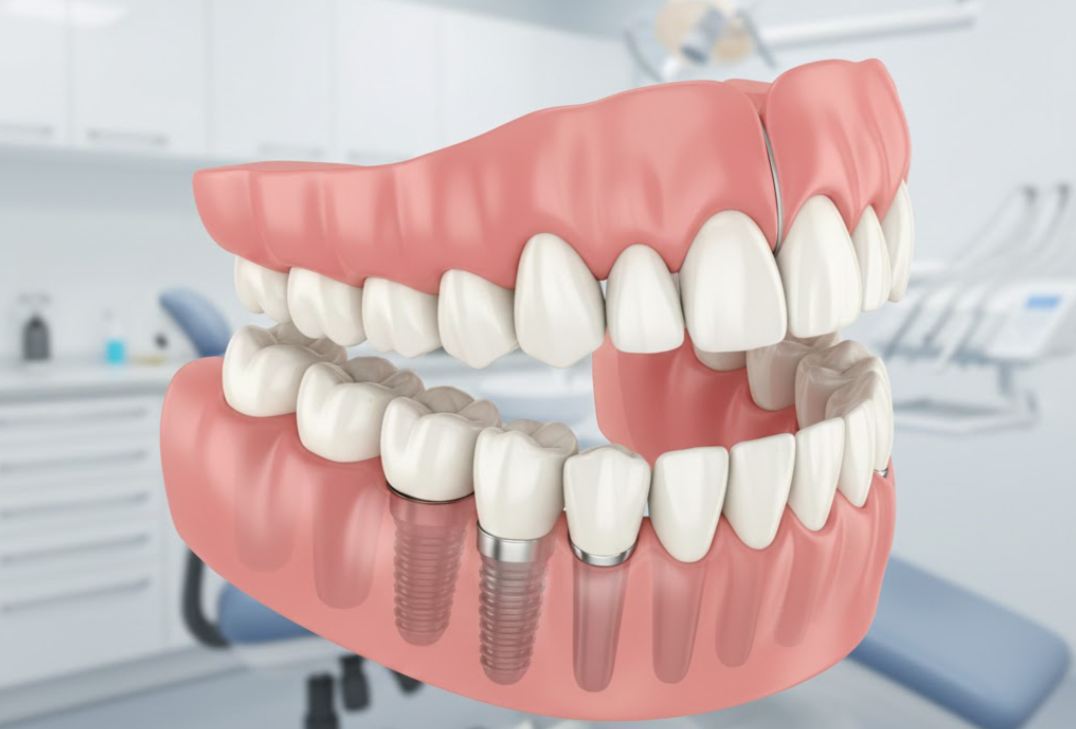
Dental implants dentures use strategically placed titanium posts in your jawbone to support a full arch denture. Unlike traditional dentures that rest on your gums and rely on suction or adhesive, implant-supported dentures attach to these permanent fixtures through various mechanisms, creating exceptional stability that transforms the denture-wearing experience.
The concept is elegant in its efficiency. Rather than placing an individual implant for every missing tooth, which can be costly and time-consuming, dental implants dentures use a smaller number of implants positioned strategically to support an entire arch of replacement teeth. This approach provides the security of implants while making treatment more accessible and practical for patients replacing all their upper or lower teeth.
The implants integrate with your jawbone through a natural process called osseointegration, where the bone grows around the titanium posts and fuses with them. This biological bond creates a solid foundation that can withstand normal chewing forces and provides stimulation that helps preserve jawbone density. For patients seeking comprehensive Dental Care in North York, understanding this treatment option represents an important step toward reclaiming full dental function.
Types of Implant-Supported Dentures
Several configurations exist for dental implants dentures, each offering different levels of stability, retention, and convenience.
Removable implant-supported dentures, also called snap-on dentures or overdentures, attach to implants through ball-and-socket attachments or a bar retention system. You can remove these dentures daily for cleaning, which some patients prefer for maintenance purposes. The denture snaps securely onto the attachments, providing excellent stability during eating and speaking while maintaining the convenience of removability.
Fixed implant-supported dentures are permanently attached to the implants and can only be removed by your dental professional during maintenance appointments. These dentures function most like natural teeth, offering maximum stability and eliminating any movement during use. You care for them by brushing and using other cleaning aids, similar to natural teeth, but cannot take them out yourself.
All-on-4 and All-on-6 represent specific treatment protocols developed to maximize stability while minimizing the number of implants needed. The All-on-4 system uses four precisely angled implants to support a full arch of teeth, while All-on-6 uses six implants for additional support. These approaches often allow for immediate loading, meaning you can receive temporary teeth on the same day as implant placement.
Consulting with a trusted Dentist in North York helps you understand which type of implant-supported denture best suits your specific situation, bone quality, and lifestyle preferences.
Advantages Over Traditional Dentures
If you’ve worn traditional dentures, you already understand their limitations. The constant worry about slipping during meals or conversations creates anxiety that affects your quality of life. Adhesives provide some help but require daily application and still don’t prevent all movement. Many denture wearers find themselves restricting their diet to softer foods and avoiding certain social situations.
Dental implants dentures eliminate these concerns. The attachment to implants creates stability that allows you to eat foods traditional denture wearers avoid. Corn on the cob, apples, steaks, and other challenging foods become enjoyable again. You can speak confidently without worrying about your dentures shifting or clicking.
The bone preservation benefit cannot be overstated. Traditional dentures rest on your gums without providing any stimulation to the underlying bone. Over time, this leads to bone resorption, causing facial changes that create a sunken appearance and requiring denture adjustments or replacements as the bone shrinks. Dental implants stimulate the bone just as natural tooth roots do, dramatically slowing or even preventing this bone loss.
Comfort improves significantly as well. Because implant-supported dentures don’t rely on suction for retention, upper dentures can be designed without the palate-covering section that traditional dentures require. This opens up your palate, restoring normal taste sensation and making speech feel more natural. The absence of movement also eliminates the sore spots that sometimes develop with traditional dentures.
For comprehensive Dental Implants in North York, experienced professionals guide you through the benefits specific to your situation and help you understand what improvements you can expect.
Advantages Over Individual Implant Crowns
At the other end of the spectrum, some patients replacing all their teeth consider individual implant crowns for each missing tooth. While this approach creates the most natural-looking and natural-functioning result, it presents practical challenges that make dental implants dentures a more sensible choice for many people.
The number of implants required for individual crowns is substantial. Replacing a full arch typically requires 8 to 10 implants or more, compared to 4 to 6 for implant-supported dentures. Each additional implant increases surgical time, healing complexity, and overall investment significantly.
Bone grafting requirements often increase with individual implant approaches as well. Each implant needs adequate bone in its specific location, whereas strategically placed implants for denture support can be positioned in areas with better bone quality, sometimes avoiding the need for extensive grafting.
The timeline for treatment extends considerably with individual implants. While both approaches require osseointegration time, the complexity of coordinating multiple individual restorations adds months to the process. Dental implants dentures often allow for streamlined treatment with more predictable timelines.
For patients who want excellent stability and function but need to balance these benefits with practical considerations, dental implants dentures offer an ideal middle ground.
The Treatment Process
Understanding what to expect during your journey to dental implants dentures helps reduce anxiety and allows proper preparation. The process typically unfolds over several months, though immediate loading protocols can sometimes accelerate the timeline.
Your treatment begins with comprehensive evaluation including detailed imaging of your jaw structure. Three-dimensional cone beam CT scans allow your dental team to assess bone quality and quantity, identify anatomical structures, and plan precise implant placement. This planning phase is crucial for achieving optimal results.
If you have remaining teeth that need extraction, this typically happens before or during implant placement. Your dental team discusses whether immediate loading with temporary teeth on the day of surgery is appropriate for your situation, or whether you’ll wear a traditional denture during the initial healing period.
The surgical phase involves placing the predetermined number of implants in strategically chosen positions in your jaw. Modern surgical techniques and anesthesia options, including sedation if desired, ensure your comfort throughout the procedure. Most patients report the experience is far less uncomfortable than anticipated.
Following surgery, a healing period of several months allows osseointegration to occur. During this time, you typically wear a temporary denture to maintain appearance and function. Once your dental team confirms successful implant integration, the final denture is fabricated and attached to the implants.
Working with experienced professionals at Global Dental Centre ensures each phase progresses smoothly with clear communication and expert care.
Candidacy Considerations
Most people who have lost all or most of their teeth can benefit from dental implants dentures. However, certain factors influence candidacy and may require additional preparation before treatment.
Adequate bone volume is essential for implant success. If you’ve been without teeth for an extended period, bone resorption may have reduced the available foundation. The good news is that dental implants dentures often require less bone than individual implant approaches because the implants can be positioned strategically in areas with better bone quality. When necessary, bone grafting procedures can rebuild structure to support implant placement.
Good overall health supports healing and long-term success. Well-controlled chronic conditions like diabetes don’t prevent implant treatment but require careful management throughout the process. Smoking significantly impairs healing and osseointegration, so smoking cessation is strongly recommended before implant surgery.
Commitment to oral hygiene and regular dental maintenance is crucial. While implants cannot decay, the surrounding tissues require healthy maintenance to prevent inflammation and infection. Patients willing to embrace proper care routines enjoy excellent long-term outcomes.
Realistic expectations matter as well. Dental implants dentures provide dramatic improvements over traditional dentures, but they differ from natural teeth in some ways. Understanding both the benefits and limitations ensures satisfaction with your results.
Recovery and Adjustment Period
The initial healing period after implant placement requires temporary modifications to your routine. You’ll need to eat soft foods for several weeks and avoid putting excessive pressure on the surgical sites. Discomfort is typically manageable with prescribed or over-the-counter medications, and most people return to light activities within a few days.
Swelling and bruising are common for the first week after surgery. Ice packs, keeping your head elevated while sleeping, and following all post-operative instructions help minimize these effects. Any prescribed antibiotics should be taken as directed to prevent infection.
As you transition to your final restoration, there’s an adjustment period while your mouth adapts to the implant-supported denture. Speaking might feel slightly different initially as you get used to the new tooth positions and the way the denture feels. Reading aloud in private helps you adapt more quickly.
Eating requires some relearning as well. Even though implant-supported dentures are far more stable than traditional dentures, you’ll need to rediscover the right pressure for biting and chewing. Start with softer foods and gradually progress to more challenging items as you gain confidence.
Maintenance and Long-Term Care
Caring for dental implants dentures involves daily hygiene and regular professional maintenance. The specific routine depends on whether you have removable or fixed implant-supported dentures.
Removable implant-supported dentures should be taken out daily for thorough cleaning. Brush the denture with a soft-bristled brush and mild soap or denture cleaner, paying attention to all surfaces including the areas that contact the implant attachments. Clean around the implant posts in your mouth using a soft toothbrush or specialized implant brush. Soak the denture overnight in water or cleaning solution.
Fixed implant-supported dentures require cleaning around and under the restoration using specialized brushes, floss threaders, or water flossers. Your dental team provides detailed instructions on accessing all areas that require cleaning. The technique is more involved than caring for natural teeth but becomes routine with practice.
Professional maintenance appointments every few months allow your dental provider to thoroughly clean areas you cannot reach at home, check implant stability, examine the condition of your restoration, and address any concerns. These visits are essential for long-term success.
Expected Longevity and Value
The titanium implants themselves can last a lifetime when properly maintained and cared for. The denture restoration attached to the implants typically lasts 10 to 15 years before requiring replacement due to normal wear, though some patients get even longer service from quality restorations.
When the denture eventually needs replacement, the implants remain in place and the new denture attaches to the existing implants. This means the most invasive part of treatment happens only once, with subsequent denture replacements being straightforward and relatively simple procedures.
Considering the longevity of the implants and the dramatic quality-of-life improvements they provide, dental implants dentures represent excellent value. The freedom to eat confidently, speak without worry, and smile without self-consciousness affects every aspect of daily life.
Making the Decision
Choosing dental implants dentures involves weighing multiple factors including your current oral health, bone quality, lifestyle needs, and long-term goals. The comprehensive evaluation process includes discussion of all these elements, ensuring you make an informed decision that aligns with your priorities.
Many patients appreciate having options explained clearly so they can choose the approach that feels right for them. Whether you prefer removable dentures for easy cleaning or fixed dentures for maximum stability, both implant-supported options provide dramatic improvements over traditional dentures.
Special Considerations
Certain situations require additional attention during treatment planning. Patients who clench or grind their teeth might need protective nightguards to prevent excessive stress on the implants and denture. Those with significant bone loss might require grafting procedures before or during implant placement.
Previous radiation therapy to the head or neck area can affect healing and osseointegration, requiring modified treatment protocols. Certain medications, particularly those affecting bone metabolism, might influence treatment planning as well.
Your dental team evaluates all relevant factors and develops a personalized treatment plan that addresses your specific needs and circumstances. This individualized approach maximizes the likelihood of successful outcomes.
Frequently Asked Questions
How many implants are needed for implant-supported dentures?
The number of implants needed depends on which jaw is being treated and the specific protocol chosen. Lower jaw implant dentures typically require a minimum of two to four implants, though four to six provides better stability. Upper jaw implant dentures usually need four to six implants due to the bone being less dense. All-on-4 systems use four precisely angled implants, while All-on-6 uses six for additional support. Your dental team recommends the optimal number based on your bone quality and the type of denture chosen.
Can I sleep with my implant-supported dentures in place?
If you have removable implant-supported dentures, you can sleep with them in place, though many dental professionals recommend removing them at night to give your gum tissues a rest. Fixed implant-supported dentures remain in place all the time, including during sleep, since only your dental professional can remove them. Discuss sleeping preferences with your dental team when choosing between removable and fixed options to ensure the solution fits your lifestyle.
What can I eat with dental implants dentures?
One of the greatest benefits of implant-supported dentures is the ability to eat almost any food you enjoy. Unlike traditional dentures that restrict your diet to softer items, implant-supported options provide the stability needed to bite and chew tough or crunchy foods. Most patients can eat corn on the cob, apples, steak, nuts, and other challenging foods that were off-limits with traditional dentures. You’ll regain dietary freedom and the pleasure of enjoying meals without restrictions.
How do dental implants dentures compare in terms of investment to traditional dentures?
Dental implants dentures require a higher initial investment than traditional dentures due to the surgical placement of implants and the more complex restoration process. However, they provide significantly better function, comfort, and longevity. Traditional dentures need frequent adjustments and periodic replacement as bone loss continues, while implants preserve bone and can last decades. Many patients find the long-term value and quality-of-life improvements make implant-supported dentures well worth the investment.
Is the implant surgery painful?
Most patients experience minimal discomfort during implant surgery thanks to local anesthesia and optional sedation. After surgery, some swelling, bruising, and tenderness are normal but typically well-managed with prescribed or over-the-counter pain medications. Many people compare the recovery to having teeth extracted. Following post-operative instructions carefully minimizes discomfort and promotes smooth healing. The temporary discomfort is far outweighed by the long-term benefits of stable, functional teeth that dramatically improve quality of life.
Conclusion
Dental implants dentures represent a transformative solution for people who have lost most or all of their teeth. By combining the comprehensive coverage of dentures with the stability and bone-preserving benefits of dental implants, this approach addresses the frustrations of traditional dentures while providing a more practical alternative to individual implant crowns for each missing tooth. The ability to eat confidently, speak clearly, and smile without worry affects every aspect of daily life, making this investment in your oral health one that pays dividends for years to come.
Global Dental Centre, recognized as one of the best dental clinics in North York, provides comprehensive implant dentistry services with a focus on patient comfort and excellent outcomes. The experienced team understands that tooth replacement represents a significant decision, and they guide patients through every step of the process with expertise and compassion. From initial consultation through final restoration and ongoing maintenance, you’ll receive personalized care designed to achieve results that enhance your life.
Located at 309 Sheppard Ave E Suite 202, North York, ON M2N 3B3, Global Dental Centre combines advanced technology with a patient-centered approach. If you’re ready to explore how dental implants dentures might restore your confidence and quality of life, contact the clinic at (647) 492-1778 or email Admin@globaldentalcom to schedule your consultation. Your journey to a complete, stable smile begins with understanding your options and receiving expert guidance tailored to your unique needs.